
Leaky Gut, Leaky Brain: Is Your Digestive System Clogging Your Motherboard?
I bet you’ve heard the term "leaky gut" by now. But did you know that you can also have a leaky brain?
Okay, stop laughing! I didn’t mean it like that.
Just as a leaky gut allows undigested waste and bacterial toxins to leak into your bloodstream, those same circulating toxins can actually cross the blood-brain barrier. That toxic burden meant to exit the body isn't just floating around in your blood. It's making its way directly to the motherboard of your body and clogging it up.
If you have daily brain fog, difficulty concentrating, slowing thought processes, or find yourself wondering what you were saying mid-sentence PLUS some odd, uncomfortable gut symptoms... you might be dealing with a toxic burden caused by a leaky gut.
This isn't just about bloating or bowel habits. It is about protecting your mind.
From the Plate to the Toilet (and Everything in Between)

In an ideal world, the digestion process is smooth sailing:
You chew your food thoroughly and swallow.
The stomach breaks it down with acid.
The small intestine absorbs the nutrient gold.
Whatever waste is left over gets deposited into the large intestine to be evacuated once or twice daily.
The whole process should be trouble-free, passing easily and fully in a sausage-like form.
You aren’t like this? Yep. A lot of people aren't!
Constipation, diarrhoea, constant bloating, flatulence (a fancy word for farts), incomplete bowel movements, dry stool, haemorrhoids, or fissures... all of these are incredibly common, but they are far from normal.
These symptoms indicate an upset gut microbiome. When bad bacteria overgrow, they generate chronic local inflammation. That inflammation degrades the "tight junctions", the cellular doors that are supposed to keep waste safely locked inside your gut until you empty the bin. When those tight junctions loosen, the system designed to keep toxic waste out of your body completely fails.
When Waste Crosses the Blood-Brain Barrier
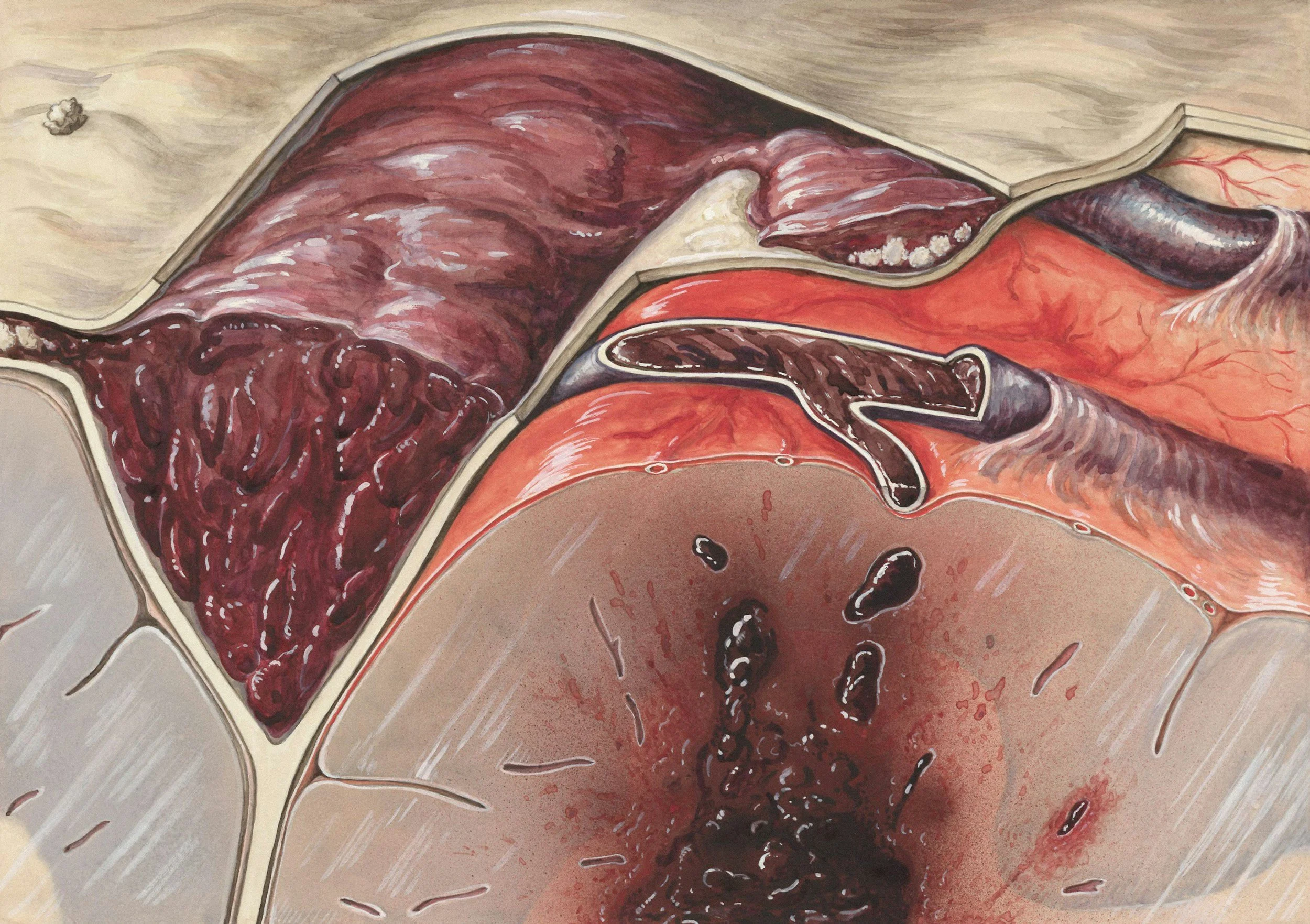
On the other end of the line, your blood-brain barrier is meant to keep foreign compounds away from delicate neurons. But that lining is exceptionally thin, imperfect, and fragile. Most of the time it does a champion job, but it can only hold so much at bay.
Heavy metals, synthetic chemicals like pesticides, alcohol, and circulating inflammatory bacterial byproducts cross that barrier, triggering neuroinflammation.
Some substances, like alcohol, directly hit the brain. But other compounds should be safely excreted in your stool without ever getting anywhere near your head. When a leaky gut keeps them in constant circulation, we run into major trouble.
For instance, an imbalance in gut bacteria elevates a compound called TMAO (trimethylamine N-oxide). Researchers have found that elevated TMAO crosses the blood-brain barrier and directly promotes amyloid plaque accumulation, the structural waste directly linked to Alzheimer's disease and cognitive decline (Vogt et al., 2018).
Yeah, I know... you probably didn't want to hear that today! But knowledge is power.
The Glymphatic Clean-Up Shift
Your brain does have a built-in waste removal system (the glymphatic system), but it only works when you are in deep sleep. Getting less than 8 hours or enduring broken, poor-quality sleep means that daily waste buildup never gets swept away.
It is infinitely easier to support your gut and prevent this cascade to start with!
5 Daily Habits to Seal Your Barriers
You don't need a radical overhaul to start protecting both barriers today:
1. Opt for Low-Tox Living
You can't avoid every synthetic chemical, but small steps reduce the burden. Wash your fruit and veg thoroughly, switch to low-tox personal hygiene products, and minimize household pesticide use.
2. Eat High-Fibre to Keep Waste Moving
A backlog (pun intended) gives waste more time to leak through tight junctions and trigger inflammation. Fibre moves the train on time!
3. Feed Your Bacteria for Butyrate
Butyrateis a short-chain fatty acid produced by good gut bacteria that actively repairs and tightens the gut lining. You can feed this bacteria by eating:
Cooked & Cooled Starches: Potatoes, rice, and oats cooled down after cooking form resistant starch.
Legumes: Lentils, chickpeas, and black beans feed butyrate producers.
Greenish Bananas: Unripe bananas and plantains are packed with resistant starch.
Allium Vegetables: Onions, garlic, leeks, and asparagus supply inulin.
Ghee: South Asian culinary traditions use ghee for good reason. It is an incredibly rich direct source of butyrate that soothes gut inflammation!
4. Protect Your Sleep Windows
Nothing is more important than sleep when you realize it is the only time your brain cleans house. Prioritise a calm wind-down routine.
5. Be Mindful of Alcohol
Alcohol directly damages both the gut lining and the blood-brain barrier. Keeping it to a minimum gives your nervous system a chance to recover.
The Motherboard Principle
Your body will do almost anything to protect your brain. It will even break down its own muscle tissue during starvation to feed it glucose. The brain is the operating system, the motherboard of your entire body.
If we aren't looking after our foundational health, the brain is usually the last thing to give up. So, if you are already complaining of chronic brain fog... how far down that track are you?
If you are ready to fix your gut lining, balance your microbiome, and clear the fog for good, book a 15-Minute First Step Chat with me today. Let's get your motherboard running clean!
Further Reading & Peer-Reviewed Resources
Simply Healing is a naturopathic and homeopathic clinic led by Sarah Dobbs, nestled in the rainforest of Kuranda. Just 30 minutes from Cairns. We specialize in Metabolic Balance and holistic health, supporting clients in person across Far North Queensland or online Australia-wide.